
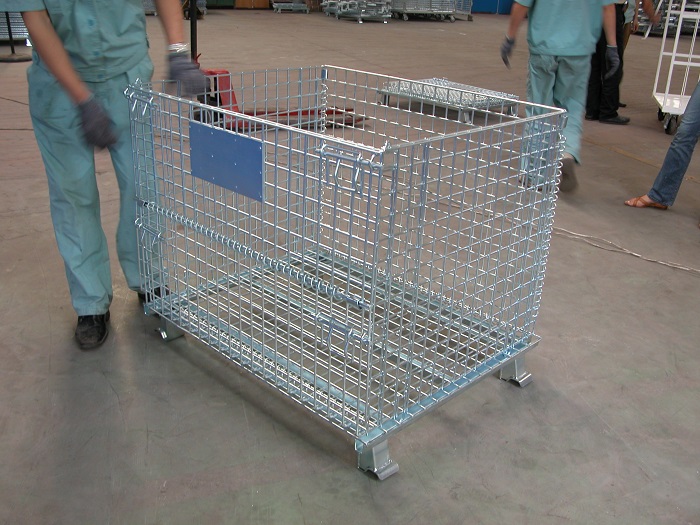
The most common cage finish is cold galvanizing, which serves most customers. Beyond it are hot-dip galvanizing, electro-galvanizing, powder coating, and paint baking, each suiting different conditions. First, electro-galvanizing — i.e., cold plating. The cage and zinc pieces are dipped in electrolyte and direct current deposits zinc onto the surface. The coating is even; acidic electrolyte gives a brighter surface, alkaline a whiter one, with no quality difference. Low cost, suited to ordinary workshop environments. Second, hot-dip galvanizing. The whole cage is dipped into molten zinc for a thick, corrosion-resistant coating. It costs noticeably more than cold plating, but pays off in damp settings, cold storage, and outdoor yards, lasting years longer. Third, powder coating and paint baking — powder finishing. Usually done only when a customer wants a specific color or display-grade appearance, e.g., to match workshop colors or act as a display container in a supermarket. Standard cages ship without this by default. Choose by environment: cold galvanizing for ordinary workshops, hot-dip for damp/cold-storage/outdoor duty, and powder coating only when appearance and color matter.