
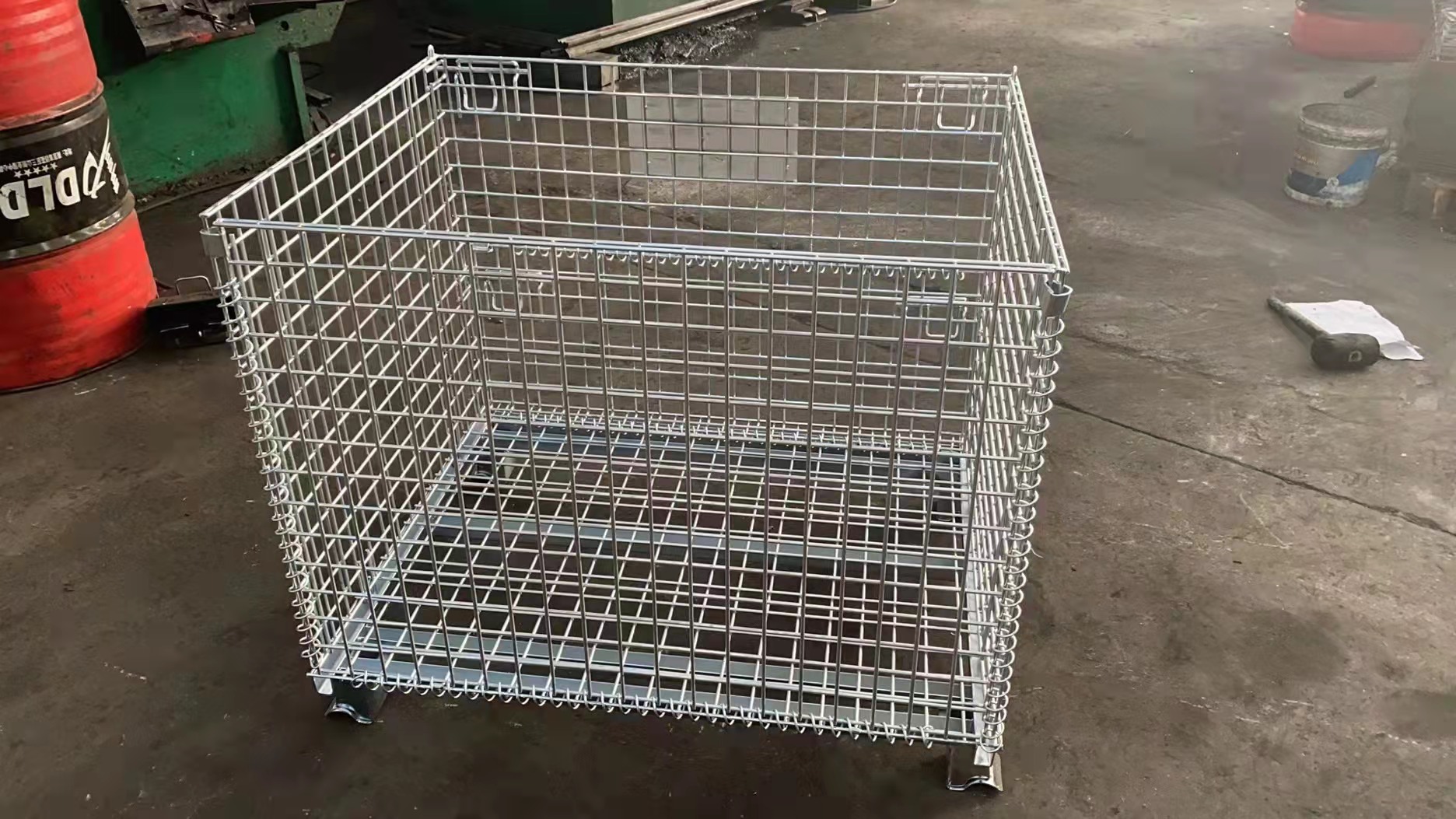
As modern industry has developed, the warehouse cage has taken on more roles: storage, turnover, and easy stock-in and stock-out, all while saving space. Compared with wooden crates (fully enclosed, split into plywood cases and wood-board cases), the metal warehouse cage is welded from high-strength wire and is also called a foldable warehouse cage, foldable wire cage, or butterfly cage, usually in a mesh form. It is now widely used in metal products, forgings, hardware stampings, auto parts, motorcycle components, and construction machinery parts. The cage is mainly for storage and turnover, but the way it is used differs: 1. Adding wheels: some customers fit wheels under the bottom for easy moving and turnover. This suits flat workshop floors where the cage shifts position often. 2. Direct stacking: some customers skip wheels and simply stack three cages on top of each other to save space. 3. On racking: other customers put the cage on large storage racks. Here you must think about how the cage bottom sits directly on the rack beams. The common approach uses square tube: some cages are built without legs and instead take three 5*10 square tubes that sit directly on the rack; others add a channel steel strip under the cage legs to raise the bottom so a forklift picks it up more easily. A cage placed on racking should not carry casters, otherwise it rolls during stacking and picking, which is a safety hazard.