
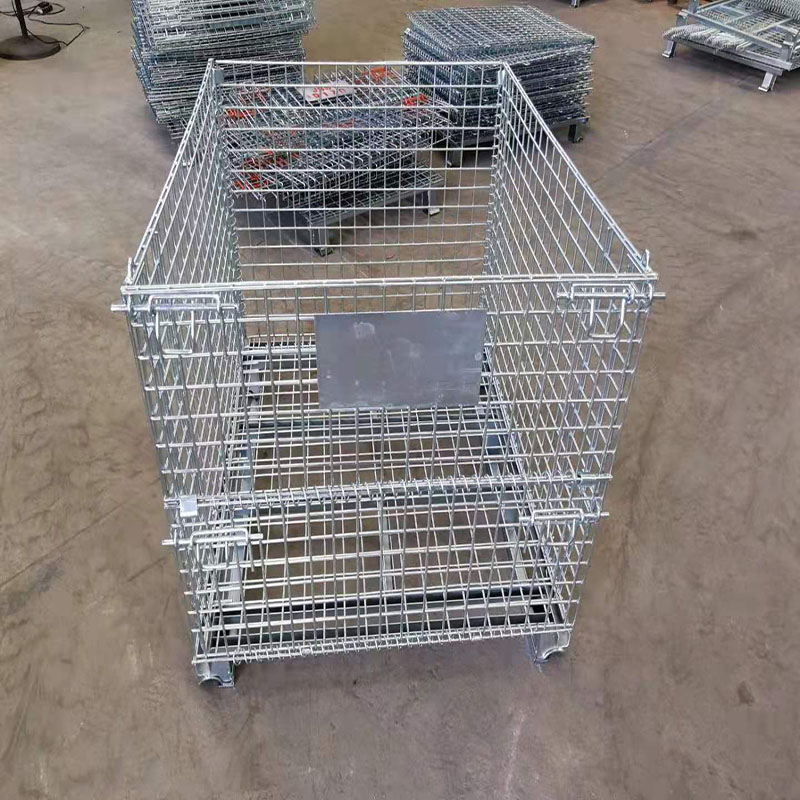
The warehouse cage is a special packaging form that works like a pallet. But its steel wire-mesh structure serves as three-dimensional loading, storage, and transport tool, as a logistics cage, and even as a point-of-sale display. There are many cage types. Common ones include metal cages, material cages, foldable cages, hollow-panel cages, heavy-duty cages, metal tote boxes, and hollow-panel bins. Xintongnuo sums up a "three-step buying guide" for customers: Step one, look at goods weight. Weight directly drives the cage's load rating; different cages carry differently, so choose by your own need. Step two, decide on multi-layer stacking. Single-layer storage and multi-layer stacking demand different cages; state single or multi before buying. Step three, check folding. Foldable cages are recommended to cut empty-cage footprint and make handling easier. In short: for heavier goods, choose metal cages, material cages, foldable cages, heavy-duty cages, or metal tote boxes; for lighter goods, a regular cage or hollow-panel cage is enough. Picking the right cage shows clear benefits: sturdy and long-lasting; loads generally run 800kg to 2 tons; stacking three to four layers is stable, and state the layers before customizing because transport and storage call for different dynamic and static loads; the foldable design stows flat when idle; repeated turnover spreads the per-trip transport cost.